
Start with one fact
Almost every serious ballet dancer alive today — in Paris, New York, Tokyo, São Paulo — was trained in a system that traces back to one building on Rossi Street in Saint Petersburg.
That building houses the Vaganova Academy of Russian Ballet, established in 1738 under Empress Anna as the Imperial Ballet School and renamed in 1957 after the pedagogue Agrippina Vaganova, who codified its training method in the late 1920s. The Vaganova method is now taught, in whole or in part, by nearly every major ballet school in the world.
That's what people mean when they say Russian ballet "sets the standard." Not that Russian companies are always the best on stage in a given season — they are not. But the vocabulary of technique itself, the way a body is taught to move on pointe, was largely written here.
Two theatres, two personalities
Russian ballet is really the story of two houses.
The Bolshoi — bold, heroic, Moscow
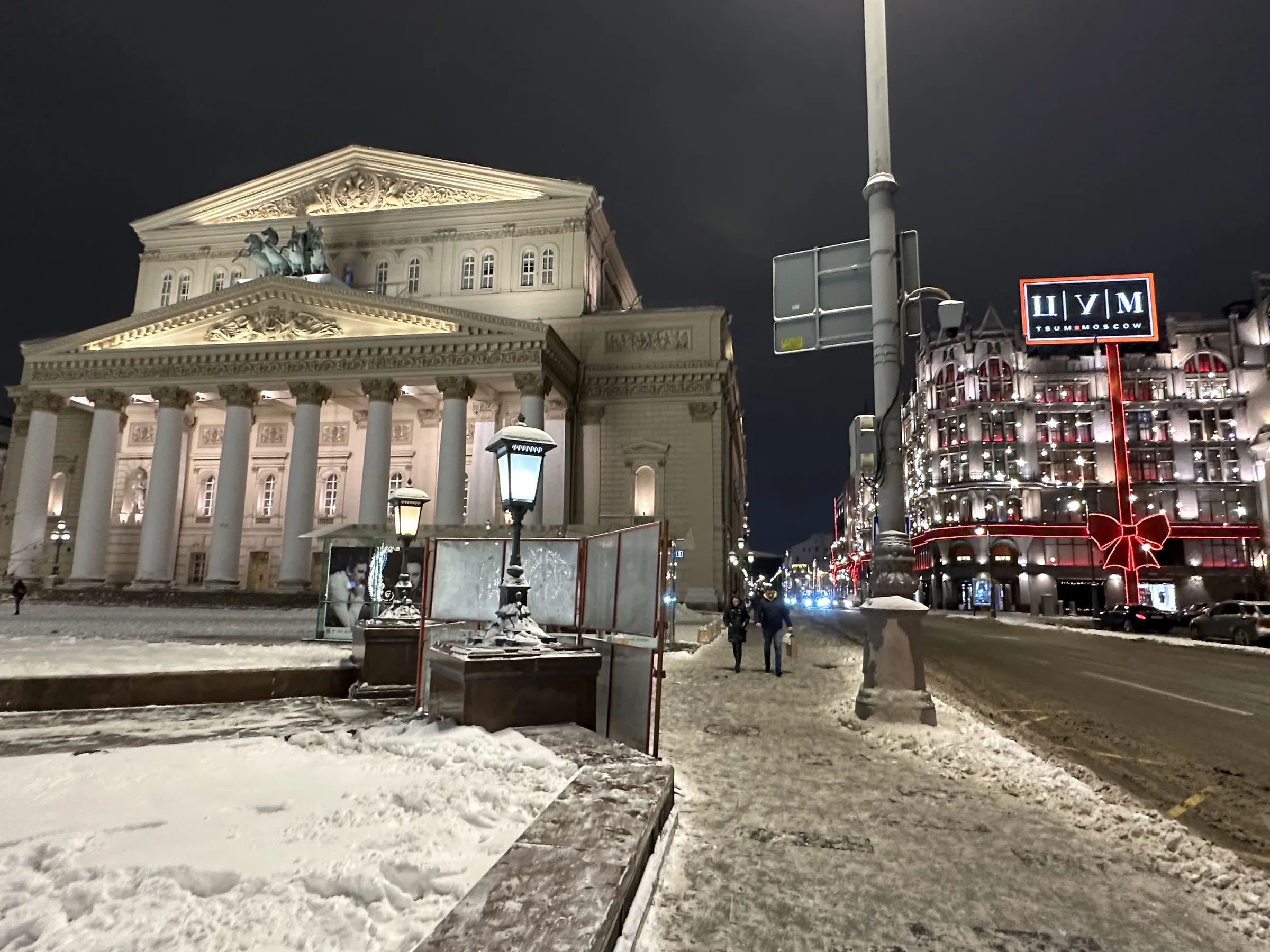
The Bolshoi Ballet was founded in 1776 in Moscow. Its name means "big" in Russian, and everything about it earns that word: the auditorium seats over 2,000, the stage machinery is famously deep, and the company's style is muscular, emotionally direct, high-jumping and dramatic. The Bolshoi is where you go for a Spartacus that pounds the floor, a Don Quixote full of fireworks, a Swan Lake that fills the entire proscenium with grief.
The current building on Theatre Square was rebuilt after a fire in 1856 and reopened in 2011 after a six-year restoration that cost the Russian state around 21 billion roubles.
The Mariinsky — refined, aristocratic, Saint Petersburg
The Mariinsky Ballet (known as the Kirov during the Soviet era) is the older sister — established in the mid-19th century in the Mariinsky Theatre, which itself opened in 1860. Its style is different by design: more restrained, more classically pure, focused on line, port de bras and academic clarity. The Mariinsky is where you go for a Sleeping Beauty that feels like architecture, a La Bayadère that reveals the choreography of Marius Petipa exactly as he wrote it.
Petipa matters. The French-born Petipa served as ballet master in Saint Petersburg from 1869 to 1903 and choreographed or restaged nearly every full-length classical ballet still in the international repertoire: Sleeping Beauty, Swan Lake (with Lev Ivanov), La Bayadère, Raymonda, Don Quixote. Almost everything a modern audience recognises as "classical ballet" was, in one way or another, made or codified on this stage.
How the tradition was exported
Russian ballet became a global language in three waves.
Wave one — Diaghilev and the Ballets Russes (1909–1929). Impresario Sergei Diaghilev took Russian dancers and Russian choreographers on tour through Paris, London and Monte Carlo. His company premiered The Firebird, Petrushka, The Rite of Spring (Stravinsky), and gave the world Nijinsky, Karsavina, Pavlova, later Balanchine and Massine. When people talk about the birth of modernism in dance, they are usually talking about a Russian company touring outside Russia.
Wave two — Soviet defectors (1961–1974). Rudolf Nureyev defected in Paris in 1961; Natalia Makarova in London in 1970; Mikhail Baryshnikov in Toronto in 1974. Each of them landed at the top of a major Western company and transformed male technique, staging traditions and public expectations of ballet in the West.
Wave three — post-Soviet migration (1990s–2000s). After the USSR ended, Russian dancers, teachers and ballet masters spread across the world's major companies as staff. The Vaganova method traveled with them and was absorbed into training systems from the Royal Ballet School in London to American Ballet Theatre in New York.
Three waves, one lineage. Which is why a young dancer in Beijing or Buenos Aires today is often, without realising it, being taught by a great-great-grandchild of Petipa.
The dancers to know
If you want an entry point into the last thirty years of Russian ballet, start with these:
- Ulyana Lopatkina (Mariinsky, retired 2017). The definitive Odette-Odile of her generation. Long lines, cool interior gravity, arguably the greatest classical ballerina of the 21st century's opening decades.
- Diana Vishneva (Mariinsky). More extroverted, dramatically restless, an interpreter as much as a technician.
- Svetlana Zakharova (Bolshoi). Extreme flexibility, hyper-extended technique, a superstar in both classical and contemporary repertoire.
- Ivan Vasiliev (Bolshoi and beyond). The most physically explosive male dancer of his generation — famous jumps, athletic and theatrical.
- David Hallberg (American, but the first non-Russian ever named principal dancer of the Bolshoi, 2011). His career shows what the Bolshoi still means globally.
What Russian theatre looks like today
Russian theatre — the spoken kind — is much less globally recognised than ballet, but at home it is arguably even more central to cultural life. Moscow alone has more than 100 active professional theatres.
Some houses worth knowing:
- Bolshoi Theatre — ballet and opera, historical repertoire, the country's flagship stage.
- Mariinsky Theatre (Saint Petersburg) — the same, for the northern capital.
- Vakhtangov Theatre — one of Moscow's most consistently ambitious drama houses, technically inventive, with a strong classical repertoire.
- Lenkom — famous for large-scale spectacle and rock-opera adaptations (Yunona and Avos, Juno and Avos).
- Sovremennik — postwar theatre founded in 1956 as a deliberate counterweight to the state style; still stages contemporary Russian drama.
- Electroteatr Stanislavsky — experimental director-led work.
- Studio Theatre "Masterskaya P. Fomenko" — one of the most respected ensembles in the country, known for delicate literary adaptations.
Since 2022, the picture has changed significantly. Several of the country's best-known directors — most famously Kirill Serebrennikov — now work abroad, and the political climate for openly critical work has narrowed. But the audience for serious theatre in Moscow is enormous, tickets to good productions sell out weeks in advance, and the technical craft on the biggest stages remains world-class.
How to actually see a performance
If you're visiting or living in Russia and want to see ballet or theatre, three practical points:
1. Buy tickets from the official theatre website. For the Bolshoi that's bolshoi.ru, for the Mariinsky mariinsky.ru. Every other Moscow theatre has its own site. Never buy from third-party resellers unless you enjoy overpaying by 300%.
2. Prices are surprisingly reasonable. A good seat at the Bolshoi for a weekday ballet in the historical stage typically costs the equivalent of a mid-range restaurant meal in Moscow. Premieres and Saturday night stars cost more. The New Stage is cheaper than the Historic Stage.
3. Foreign card payment is the tricky part. International Visa and Mastercard don't work on Russian sites since 2022. Options: pay in cash at the theatre box office, use a Chinese UnionPay card, or ask a Russian friend to book for you. We cover practical payment in our Practical Guides section.
Where to start if you know nothing
If you have one evening and want the most representative introduction to what "Russian ballet" means:
- In Moscow — book Swan Lake or Don Quixote at the Bolshoi Historic Stage. These two show off the Bolshoi's strengths and are performed regularly.
- In Saint Petersburg — book Sleeping Beauty or La Bayadère at the Mariinsky Historical Stage. These are the pieces Petipa built, danced in the house he built them for.
Do this even if you've never watched ballet before. The theatre itself is half the experience, and both houses are stunning. Just show up early, walk slowly, and let the room do half the work.
What we're covering next
This is the first post in the Two Nations Culture section. Coming next: a companion piece on contemporary Russian theatre after 2022 — who's still working in Moscow, who's building new companies abroad, and what the split means for audiences on both sides.
If you're a foreign resident in Russia who regularly goes to ballet or theatre and wants to write a first-person guide to your favourite house, get in touch.
Sources & references
- Vaganova Academy of Russian Ballet — vaganovaacademy.ru and Wikipedia overview
- Bolshoi Theatre — bolshoi.ru
- Mariinsky Theatre — mariinsky.ru
- Britannica, on Marius Petipa and the classical ballet repertoire.
- Kennedy Center Encyclopedia of the Arts, Diaghilev and Ballets Russes entries.
- The Guardian, historical coverage of the Nureyev, Makarova and Baryshnikov defections.