
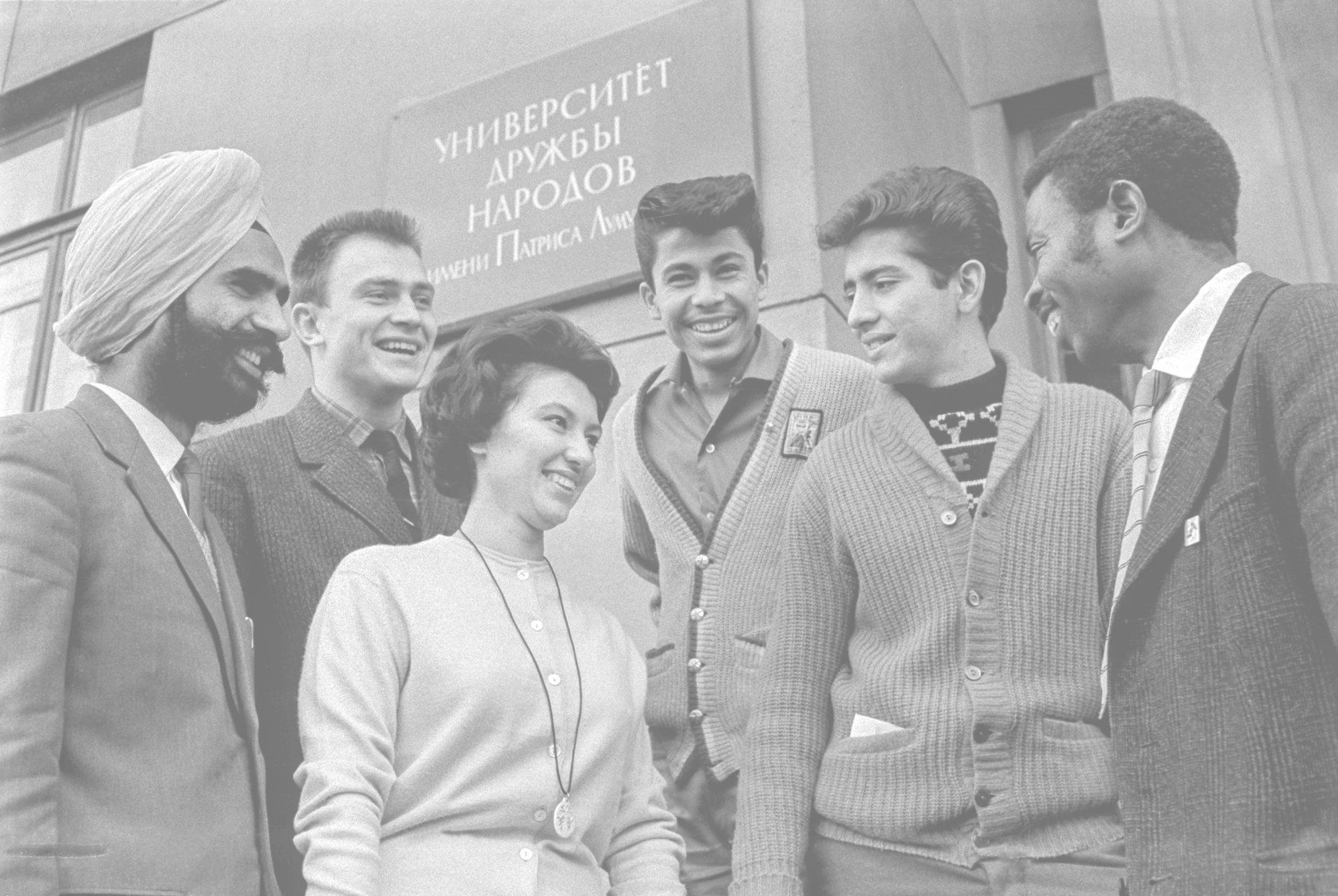
Start with the department, not the university league table. HSE, ITMO and MIPT are strong choices for data, computing and applied mathematics; MSU and NSU for fundamental science; Sechenov for medicine; Bauman for engineering; MISIS for materials; RUDN for a large international environment. Most bachelor’s degrees require Russian; English is more common at master’s and PhD level.
Youth opportunities in Russia · Checked 29 September 2026
- Open Doors: 14 subject areas; 2026 cycle includes bachelor’s, master’s, PhD and postdoc tracks
- Language: Russian dominates bachelor’s; English is more available at graduate level
- Rule: Verify the exact programme, language and recognition for the current intake
University and discipline finder
A university can be excellent in one field and ordinary in another. The table names broad strengths and entry patterns; use it to create a shortlist, then open the current programme page and curriculum for the exact intake.
| University | Strong fields | Entry pattern |
|---|---|---|
| HSE University | Economics, social sciences, business, data science, AI | English and Russian bachelor’s/master’s routes; international and double-degree programmes |
| ITMO University | Computer science, AI, photonics, biotechnology | English-taught international master’s; scholarships, exchanges and industry projects |
| MIPT | Physics, applied mathematics, computer science, aerospace, biomedicine | English and Russian tracks; base-department model and 80+ affiliated labs |
| MSU | Mathematics, physics, chemistry, biology, earth sciences | Great breadth; most programmes are Russian-taught, English tracks are faculty-specific |
| NSU | Physics, mathematics, geology, genetics, bioinformatics | Direct proximity to Siberian Branch research institutes in Akademgorodok |
| Skoltech | AI, photonics, energy, materials, life sciences, aerospace | English-only graduate university; MSc and PhD, no bachelor’s |
| MISIS | Materials science, metallurgy, quantum technologies | Government quota route and close industry links |
| Sechenov University | Medicine, pharmacy, life sciences | Check recognition and licensing rules in the country where you intend to practise |
| Bauman MSTU / RUDN | Engineering / broad multidisciplinary study | Bauman for engineering; RUDN for a large international campus and preparatory Russian |
Three admission routes
Direct paid admission is handled by each university. The government quota covers tuition and normally includes a state stipend and access to subsidised accommodation; selection begins through the official education-in-russia route. Open Doors is a free online competition covering 14 subject areas and bachelor’s, master’s, PhD and postdoctoral tracks in the 2026 cycle.
- Direct university admission / admission directe / admissão direta / прямое поступление
- Government quota / quota gouvernemental / quota governamental / государственная квота
- Open Doors scholarship competition
Why people come — and what the degree can open
Students commonly choose Russia for a strong technical tradition, funded routes, lower tuition than many Western destinations and access to Russian-speaking or BRICS-facing markets. A degree can lead to a graduate programme, laboratory, Russian employer or work tied to trade with the student’s home region — but none is automatic.
Language, recognition and the decision checklist
For most bachelor’s routes, expect Russian or a preparatory year combining intensive language with subject vocabulary. Before medicine, law, teaching or another regulated profession, ask the regulator in the country where you intend to practise whether the exact degree is recognised.
Open Doors dates and university fees change each intake. Apply only through the official competition, state portal or university admissions office.