
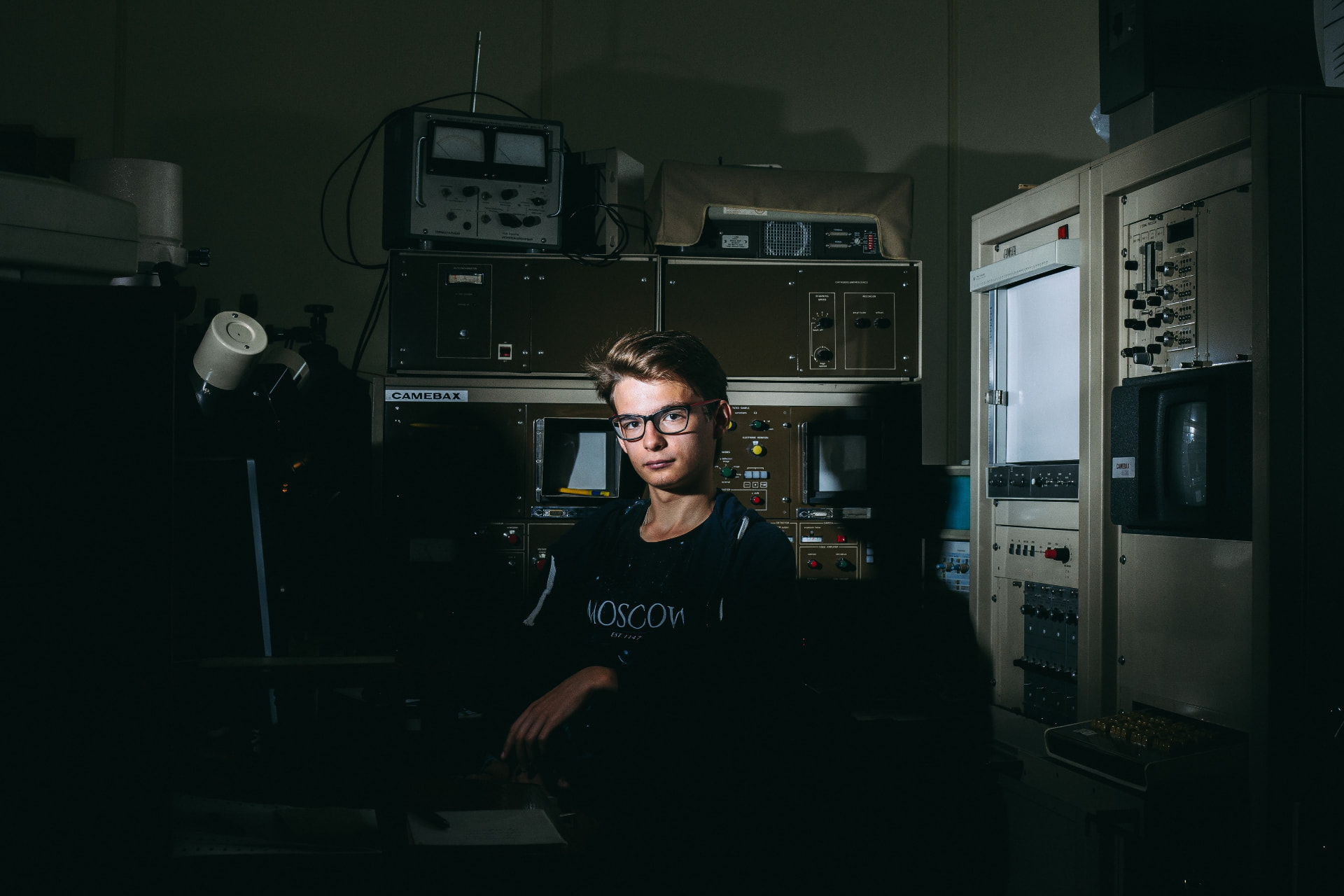
The clearest English-language research entry is Skoltech at graduate level. Akademgorodok connects NSU students directly with Siberian Branch institutes; MIPT offers physics-heavy tracks and affiliated laboratories; ITMO is strongest in computing and photonics. MSU offers unmatched breadth but much more Russian-language friction. Choose a laboratory and supervisor, not only a university.
Youth opportunities in Russia · Checked 29 September 2026
- Skoltech: English MSc/PhD; published scholarships and industry internship
- Akademgorodok: NSU + Siberian Branch research institutes in one science district
- Rule: Confirm the laboratory, supervisor and funding before accepting
Where the research ecosystems differ
Russia’s research landscape is not one system. Skoltech is a compact English graduate university; Akademgorodok is a city-scale network of NSU and Academy institutes; MIPT’s teaching is connected to affiliated laboratories; ITMO combines research with product and industry work; MSU spans almost every fundamental field.
| Ecosystem | Strong fields | Entry route |
|---|---|---|
| Skoltech | AI/ML, photonics, energy, materials, life sciences, aerospace | English MSc/PhD; 8-week industry internship; published MSc/PhD stipends |
| NSU + SB RAS | Physics, quantum/photonics, catalysis, genetics, bioinformatics | Research internships inside Akademgorodok institutes; InteRussia is competitive and must be rechecked each cycle |
| MIPT | Theoretical/plasma physics, nanophotonics, spintronics, AI, biotech | English research tracks and 80+ affiliated laboratories |
| ITMO | Computer science, photonics, quantum technology, biotech | English master’s, industry projects, exchange and conference support |
| MSU | Fundamental mathematics and natural sciences | Largest range of faculties; many labs require Russian; English options are narrow |
| HSE | Economics, social science, data science and AI | Research master’s/PhD routes; strongest fit is quantitative and computational work |
| MISIS | Materials, metallurgy, quantum physics | Research with industrial partners; verify the active laboratory before applying |
How to enter a real laboratory
Start with a published project, laboratory and potential supervisor. Read two recent papers, check the working language, then ask whether the group is taking international MSc, PhD or short-term researchers and whether funding is attached. A university admission does not automatically place you in the laboratory you want.
- Find the active lab and supervisor
- Read recent work and verify the working language
- Ask in writing about place, funding and equipment
Funding, internships and industry
Skoltech publishes MSc scholarships of 40,000 ₽ monthly, up to 55,000 ₽ for top scorers, and PhD scholarships of 75,000 ₽; it also requires an eight-week industrial internship. NSU advertises research internships inside SB RAS institutes. ITMO describes travel support for competitive conference, internship and exchange routes. Every amount and call must be rechecked for the intake year.
The limits to verify before committing
Western grant access, some joint calls and conference travel are restricted, while cooperation has shifted toward Asia, the Middle East, Africa and Latin America. Export controls can also affect equipment and software. If the project depends on a named foreign partner, instrument or exchange, get written confirmation before accepting.
A lab page can outlive its grant. Confirm supervisor, funding, working language, equipment access and publication expectations directly with the laboratory.