🧭 Is Russia the westernmost East, or the easternmost West?
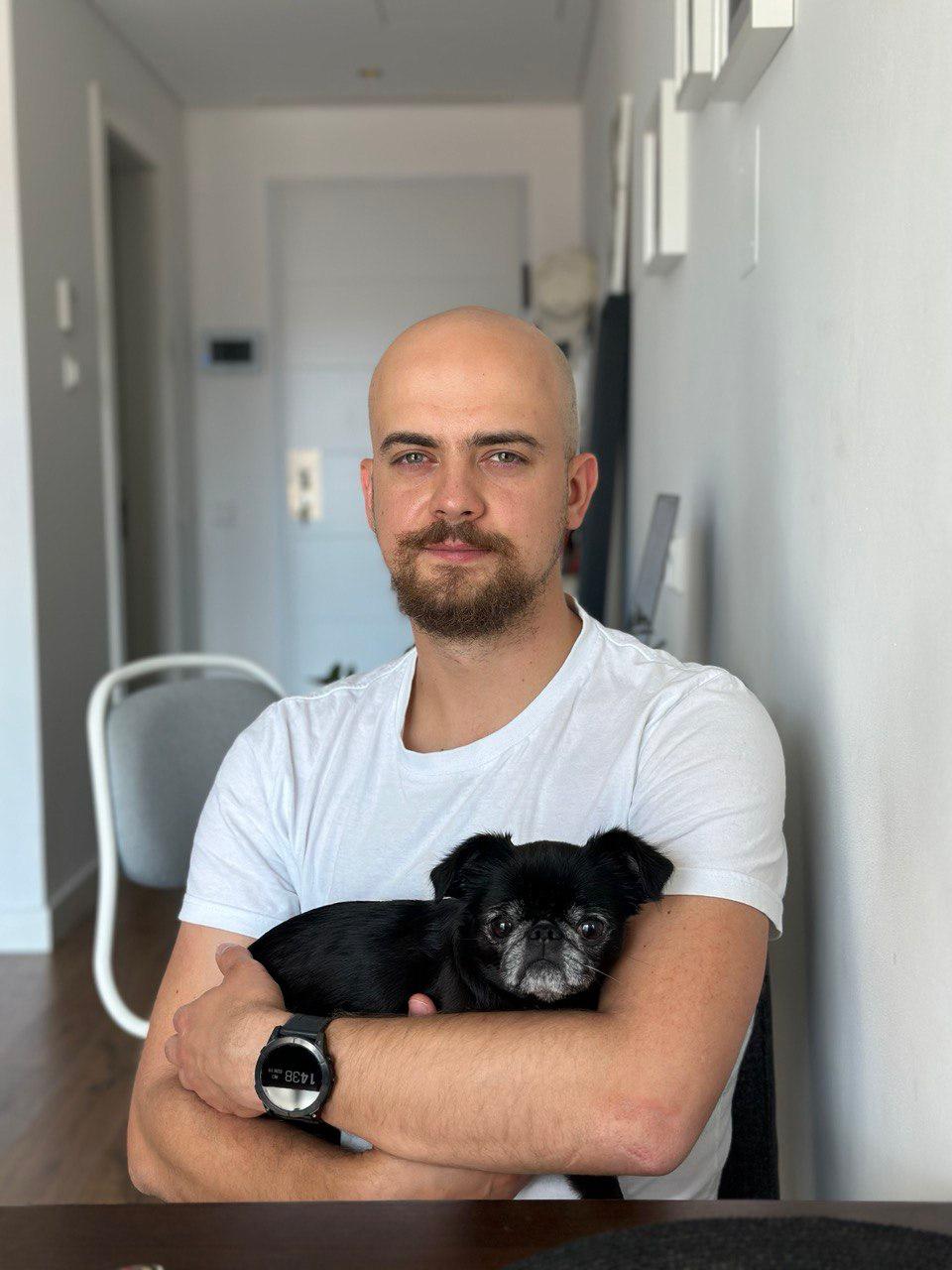
I was born in Asia, I live on the western edge of Europe, and I still don't know where home is. I suspect the country has the same condition.
Short answer: Russia is the easternmost Western country that the West stopped counting as Western, and the westernmost Eastern country that the East never counted as Eastern. The 2025 numbers look like a pivot to Asia, but they show a collapse in the West rather than growth in the East.
Key facts · data as of September 2026
- 73% / 18%: Asia's and Europe's shares of Russian foreign trade in 2025
- −7%: Russia–China trade in 2025 — the first drop in five years
- $697bn: total Russian foreign trade in 2025, down from $717bn a year earlier
- 550 years: of turning West, counted from Ivan III's marriage to Sophia Palaiologina in 1472
- 3 attempts: at turning East: 1689, Nicholas II, Stalin and Mao. Average run: about 20 years

I was born in Akademgorodok, a science town outside Novosibirsk in Siberia. That's Asia — not as a metaphor, just as geography: Beijing is closer to my hometown than Berlin is. Then came five years at Moscow's diplomatic university, where I was taught how Russia trades with the world. Then forty-eight countries. Now I live in Lisbon, the westernmost capital in Europe. After this, there's only ocean.
About five thousand miles between those two points. And one question I've been chewing on for three years: is Russia the westernmost country of the East, or the easternmost country of the West?
The fresh numbers seem to answer it. In 2025, roughly 73% of all Russian trade went to Asia and only 18% to Europe. Ten years ago Europe alone was more than half. Case closed? Not so fast. I have three objections, and the first one is Asia itself.

1. Asia didn't get the memo
Russia's trade with China fell about 7% in 2025 — the first drop in five years. Chinese car imports were cut roughly in half. And yet Asia's share of Russian trade still went up. By less than a percentage point.
How does that work? Simple. Trade with Europe collapsed even harder — down almost 80% in four years. Russia used to be a top-ten trading partner for the EU. It is now sixteenth.
The statistical sleight of hand
Asia's share didn't grow because Asia grew. It grew because Europe disappeared. That's not a pivot. That's losing one leg and announcing that the remaining one now accounts for 100% of your legs.
Quick question while you're here: if borders reopened tomorrow, would your first flight be to Beijing or to Milan? Be honest.
2. We spent 550 years proving we were Western
Here's my favorite part, because almost everyone gets it wrong. I did too, until I went digging. The standard story says Peter the Great turned Russia toward Europe: shipyards, shaved beards, St. Petersburg. But Peter wasn't first. He was third.
1472. Ivan III marries Sophia Palaiologina, a Greek princess raised in Rome. Three years later the Italian architect Aristotele Fioravanti of Bologna starts building the Dormition Cathedral inside the Kremlin. The country's most sacred building — designed by an Italian. Around the same time the double-headed eagle shows up on the state seal.
1553. English captain Richard Chancellor goes looking for a sea route to China and finds the mouth of the Northern Dvina in the Russian Arctic instead. Two years later English merchants are trading in Moscow tax-free.
So by the time Peter went to learn shipbuilding in Amsterdam, the turn toward Europe was already a century and a half old. He didn't start it. He finished it — brutally, over everyone's objections.

Which means it's not 400 years. It's 550. For half a millennium Russia was arguing to Europe that it belonged: building St. Petersburg as a showroom, fighting in European coalitions, speaking French at balls. And Europe, broadly, agreed — grudgingly, with muttering about barbarians, with Napoleon and Hitler in between, but it agreed. Russia was the easternmost of the Western countries. Key word: was.
3. Three turns toward Asia. All ended the same way
Now about this being "the first time in history." It's wrong at least three times over.
Treaty of Nerchinsk
Russia's first treaty with China was signed eight years before Peter left for Amsterdam. Russian envoys reached Beijing before they reached Holland.
Nicholas II's Asia
Vladivostok, the Trans-Siberian Railway, Port Arthur, massive construction in Manchuria. Enormous money and an official Asian course. It ended at Tsushima.
Stalin and Mao
"Russians and Chinese are brothers forever", factories, engineers, help with the nuclear program. Nineteen years later: gunfire on the Ussuri River.

The average Russian turn toward Asia lasts about twenty years. The average turn toward Europe lasted three hundred.
And here's what all three had in common: Asia never once accepted Russia as one of its own. China, Japan and Korea looked at St. Petersburg and saw a European power that had arrived from the east on its own business. Useful, dangerous, temporary. Not family.


"The West is finished" — let's actually check
I have to be fair here, or I deserve everything the comments section will do to me. The case for Western decline is real. Asia is now close to half the world economy. Asian countries generate more than half of all global growth; China and India alone are over 40% of it. Europe didn't grow at all in early 2026. That's not propaganda, that's arithmetic. I see it from here too: in Portugal, salaries catch up with housing prices roughly never, and young people leave for Amsterdam and Berlin in whole graduating classes.
But two things don't fit the picture.
First: Russia's total foreign trade in 2025 didn't shift east. It shrank — from about $717 billion to $697 billion. The money didn't relocate. There's just less of it.
Second: Asia is growing for itself. More than half of Asian trade is Asians trading with each other, and that share keeps rising. Russia isn't a participant in that growth. It's a fuel supplier to someone else's growth — at a discount, with constant payment problems.
Growing with Asia and selling Asia discounted oil are two completely different jobs.

The view from the western edge
I live where Europe physically stops. From here you notice something you can't see from Moscow. Europe isn't pushing Russia away — Europe stopped thinking about Russia. Those are different things, and the second one stings far more: you push away what matters to you. In 2022 people in Lisbon bars asked me about Russia every single evening. Now it's once a month, and mostly out of politeness.
And from Akademgorodok, where I grew up, you notice something else. Asia never invited us in. Not out of hostility. It just has its own history, thousands of years deep, and Russia shows up in it fairly late — as one more European power arriving from the north.
Russia is the easternmost Western country that the West stopped counting as Western. And simultaneously the westernmost Eastern country that the East never counted as Eastern in the first place.
The first slot was ours by default, earned over 550 years. It can be lost — that's happening right now. The second slot isn't handed to anyone: it has to be earned, and it takes roughly as long.
The world really is moving to Asia. For some that's a relocation. For others it's an evacuation. The difference isn't the direction of travel — it's whether you have a return ticket.
I was born in Asia and I live on the edge of Europe. I still don't know where home is. I suspect the country has the same condition.
Two questions — and I really want answers
- Do you personally feel Western or Eastern? Did that change after 2022?
- If Asia is booming and Russia turned toward it, why did trade with China drop 7% in 2025? I have a theory. I want yours.
Trade figures come from open Russian and Chinese customs statistics and Eurostat reporting for 2025, rounded. Historical dates follow publicly available academic sources. Photographs are from Wikimedia Commons, with a link to each file under the image.
Frequently asked questions
📚 Read Also
Comments (0)
Be the first to comment!