
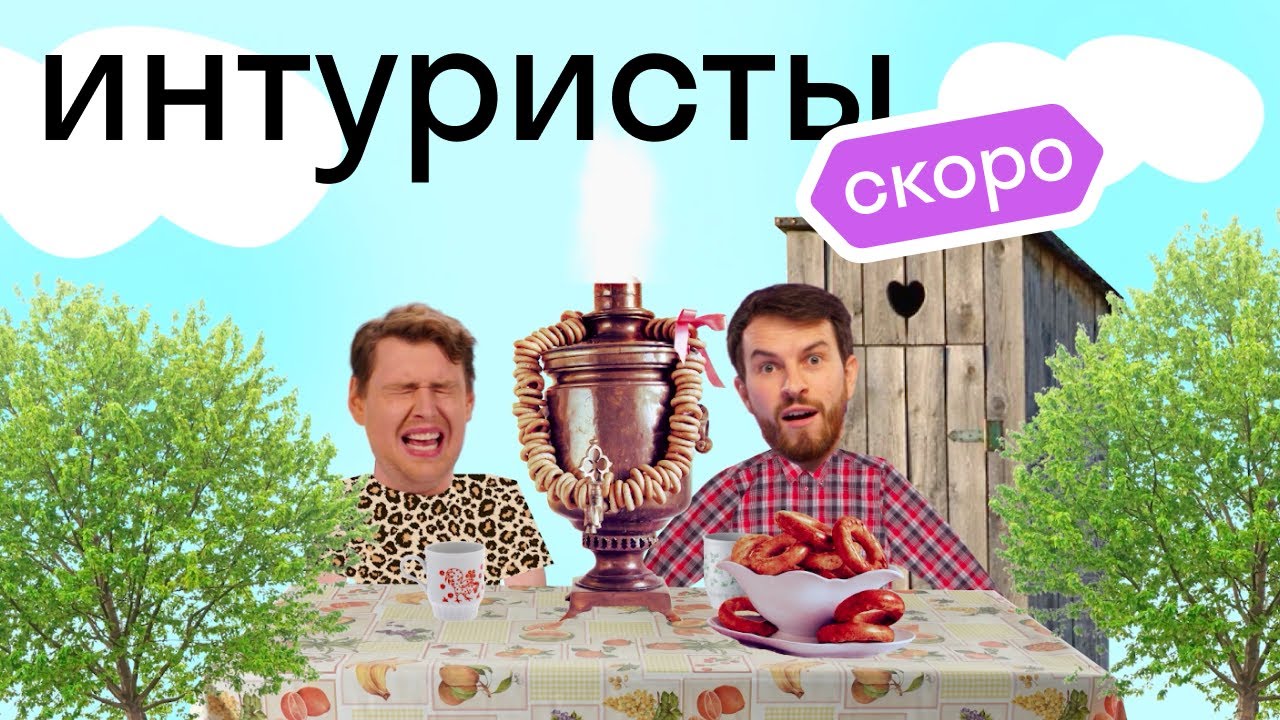
Here's a paradox. One of Russia's biggest online English schools became famous on YouTube for videos of foreigners speaking Russian. They eat ryazhenka, guess Russian slang, sleep on a village stove and jump into snow at -30°C.
It sounds backwards. It works anyway. The Skyeng channel has around 2.2 million subscribers and more than 650 million total views (third-party stats, approximate). Most of that comes from one simple idea: put friendly foreigners in Russian situations and let the culture clash do the jokes.
This is a guide to that universe: who the heroes are, which shows to watch first, and why a language school ended up with one of the longest-running "Russia through foreign eyes" franchises online.
Meet the main heroes
Dani, the "Amerikashka"
Real name: Daniel Barnes. Born in 1989 in Indiana, he grew up on a farm among cornfields, studied at Butler University, met a Russian teacher and moved to Russia in 2013. There he studied at GITIS under Leonid Kheifets and joined the Yermolova Theatre company.
Online, almost nobody calls him Daniel. He is "Amerikashka Dani" (roughly "little Yankee Dani"), Skyeng's resident American. He explains US life, compares it with Russian life and reacts to Russian comedians, politicians and influencers.
The fame spilled into TV and film. Dani had a role in the series "Oldskul" on PREMIER and Start, and won over Oleg Menshikov with a rap at an audition. In February 2026 he got his own travel show, "Russian Dream with Dani-Amerikashka", on Pyatnitsa!. His confessed nemesis is the letter "Ж".
Jordan, the Brit
Jordan Worsley is the Englishman of the duo. Skyeng's award entry says he had lived in Russia for 8 years (Dani for 11). He moved from England to Moscow and, by his own account, had no plans to go back until the pandemic changed things.
He is the dry British half of the act: pub culture, slang like "on the lash" and "hair of the dog", and the most British reactions to Russian roads you'll ever see. The channel once ran a whole episode testing him: "Brit, Russian or SPY?"
Start here if you want to see their chemistry.
The supporting cast
Around the duo, Skyeng built a rotating "team of foreigners" who live in Russia and speak Russian at very different levels:
- Marco from Italy, with a running fight with the letter "Ы".
- John from Korea, who joins language guessing games with Marco and Jordan.
- Ana, a regular in quiz and "spot the Russian" formats, who also ranked celebrities by their French.
- Zimran from India, who busts myths about India: cows in traffic, astrologers and Bollywood dancing.
- A wider pool for group episodes: guests from Japan, Peru, Egypt, Zambia and Canada tasting Russian winter preserves, and from Syria, Albania, Italy and Greece in "find the Russian among foreigners".
The bench keeps growing: Skyeng still runs open casting calls for foreigners in Moscow who speak or learn Russian.
"Intourists": the flagship road show
In 2021 Skyeng took the format out of the studio. "Intourists" sends Dani and Jordan around Russia to try things a foreigner should try at least once, preferably on camera.
Episode one: the village of Martynovo, Yaroslavl region. Russian roads, milking a cow and horseflies Jordan still hasn't forgiven. Locals started speaking German to them, and some wondered if they were "spies in disguise". Jordan's verdict: if he ever left the city, he'd rather be a lumberjack in the Alps than a farmer.
Later seasons went much further, by platskart (open-plan sleeper train) to Krasnodar Krai, Suzdal and Kalmykia, then Barnaul and Altai.
"I don't believe this is Russia!" Buddhism, camels and throat singing.
Banya, skiing, a jump into snow at -30°C and ice fishing.
More stops worth watching:
- Sochi: a bungee swing, chacha and a Soviet-style sanatorium.
- Maslenitsa in Suzdal: blini, chastushki (folk ditties) and a night on a Russian stove.
- The season finale: Kargopol, Arkhangelsk and more platskart.
- Barnaul: a real Russian school — morning assembly, history quizzes, canteen buckwheat with a cutlet. Verdict: they "barely survived".
- Wild Altai: camping with channel subscribers.
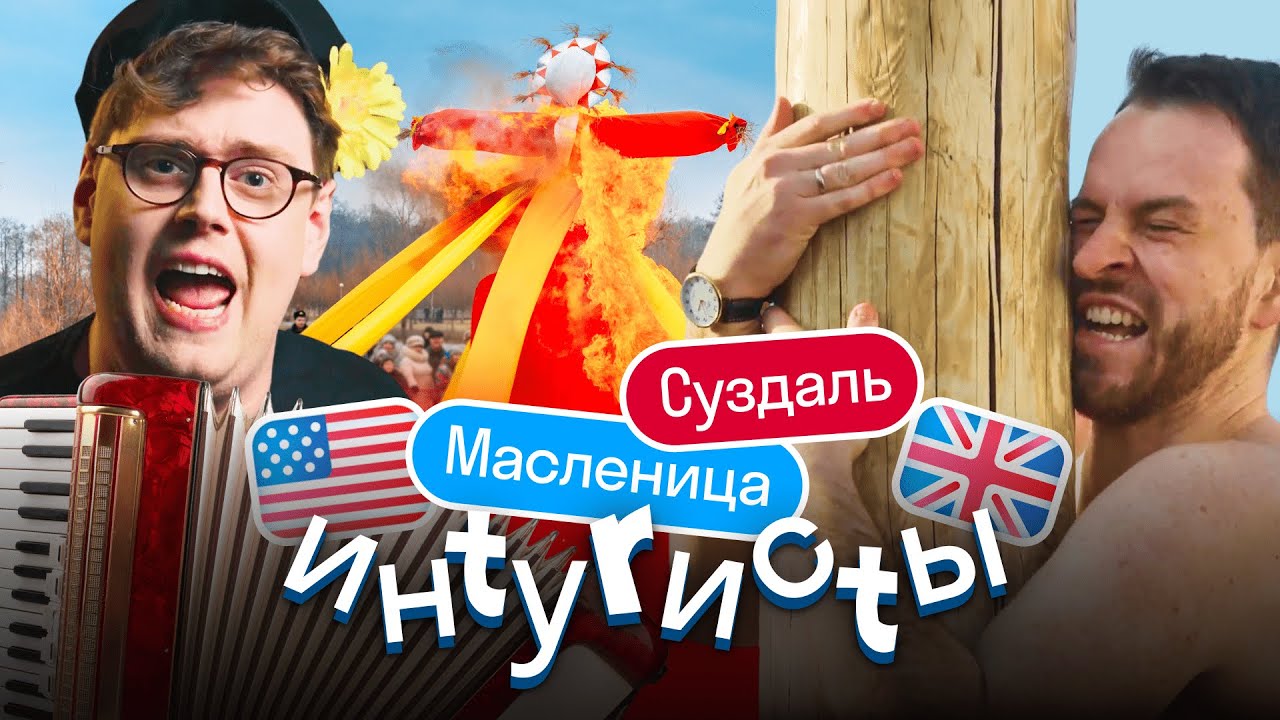
The show won recognition at the E+ Awards in the education category. Skyeng's stated goal: inspire Russians to learn English by showing how foreigners see Russian culture and everyday life.
The studio formats that never get old
Between road trips, the channel runs repeatable formats: cheap to produce, easy to binge, endlessly reusable.
1. Russian language trials. Foreigners try to explain odd Russian words, customs, regional slang and idioms. Native viewers play along and feel smart.
Foreigners guess the meanings of strange Russian words and customs.
Spin-offs: part 2, regionalisms and idioms, a quiz with Alexander Varlamov and Broken Telephone with difficult Russian words.
2. "How Russified are you?" A "tough childhood" story? Glittery good-morning postcards on WhatsApp? The foreigners check how Russian they've become.
3. Spot the Russian. One Russian hides among foreigners and the hosts find them by intuition. Harder than it sounds when the "foreigners" include a Syrian doctor and an Italian who grew up in Kislovodsk.
4. Food reactions. Ryazhenka, "gudron" and a classic buterbrod, plus a whole episode on Russian winter preserves.

5. Culture reactions. Memes all of Russia knows, folk hits from Kadysheva, Varum and Gradsky, New Year songs and Diskoteka Avariya, Russian roads on dashcam and dating in Russia.
6. Battles and specials. British vs American accents, DNA tests that surprised everyone, "What? Where? When?" against viewers and "Amerikashka, where is it better?" — Russia vs USA on everything from shopping to funerals.
Why it works as marketing
Plenty of brands have tried "foreigners react to Russia". Few kept it running for years. Skyeng got a few things right.
- Characters, not one-off videos. Viewers come back for Dani and Jordan, not for "a foreigner". Recurring faces turn views into loyalty, and loyalty outlasts any ad campaign.
- The paradox is the pitch. The hosts are native English speakers who slip into English as they travel. The award entry says it directly: entertainment plus education, the value of a language shown through people. Hidden message: "They learned your language. You can learn theirs."
- The audience gets to be the expert. The Russian viewer knows the answer, the foreigner doesn't. That feels good, and people share what makes them feel good.
- A soft conversion path. The heroes become products — courses and checklists by Dani and Jordan, vocabulary segments, a free level test in every description. Nobody feels sold to, but the next step is one click away.
- Cheap, repeatable formats. A quiz or tasting is filmed in a day; expensive road trips are rare tentpoles that keep the schedule exciting.
- Talent that grows beyond the channel. Dani went from YouTube to theatre, series and his own TV show — and every appearance sends attention back to where he started.
Where to start watching
| If you want… | Watch this |
|---|---|
| The origin story | Intourists trailer: foreigners in a Russian village |
| Epic travel | Kalmykia, or winter at -30°C |
| The duo's chemistry | Lie detector: Dani vs Jordan |
| Russian language pain | Russian language trial |
| Food chaos | Ryazhenka, gudron and buterbrod |
| Newest group episodes | Who explains better? |
The Two Nations take
The Skyeng foreigners work because they do what Two Nations cares about: they show the gap between Russia and the rest of the world without mocking either side. The jokes come from honest confusion, not contempt. Under the "Ы" jokes and snow jumps the message is simple: a foreigner can live in Russia, speak Russian and still stay themselves.
If you've just moved to Russia, these videos are a surprisingly good culture crash course. You'll meet the banya, platskart, Maslenitsa and the WhatsApp-postcard aunties before you meet them in real life.
All videos and thumbnails belong to Skyeng and are embedded from YouTube. Channel statistics come from third-party trackers and are approximate.
How did this land?
One tap. No account, no email, no cookie banner.
Comments (0)
Be the first to comment!