
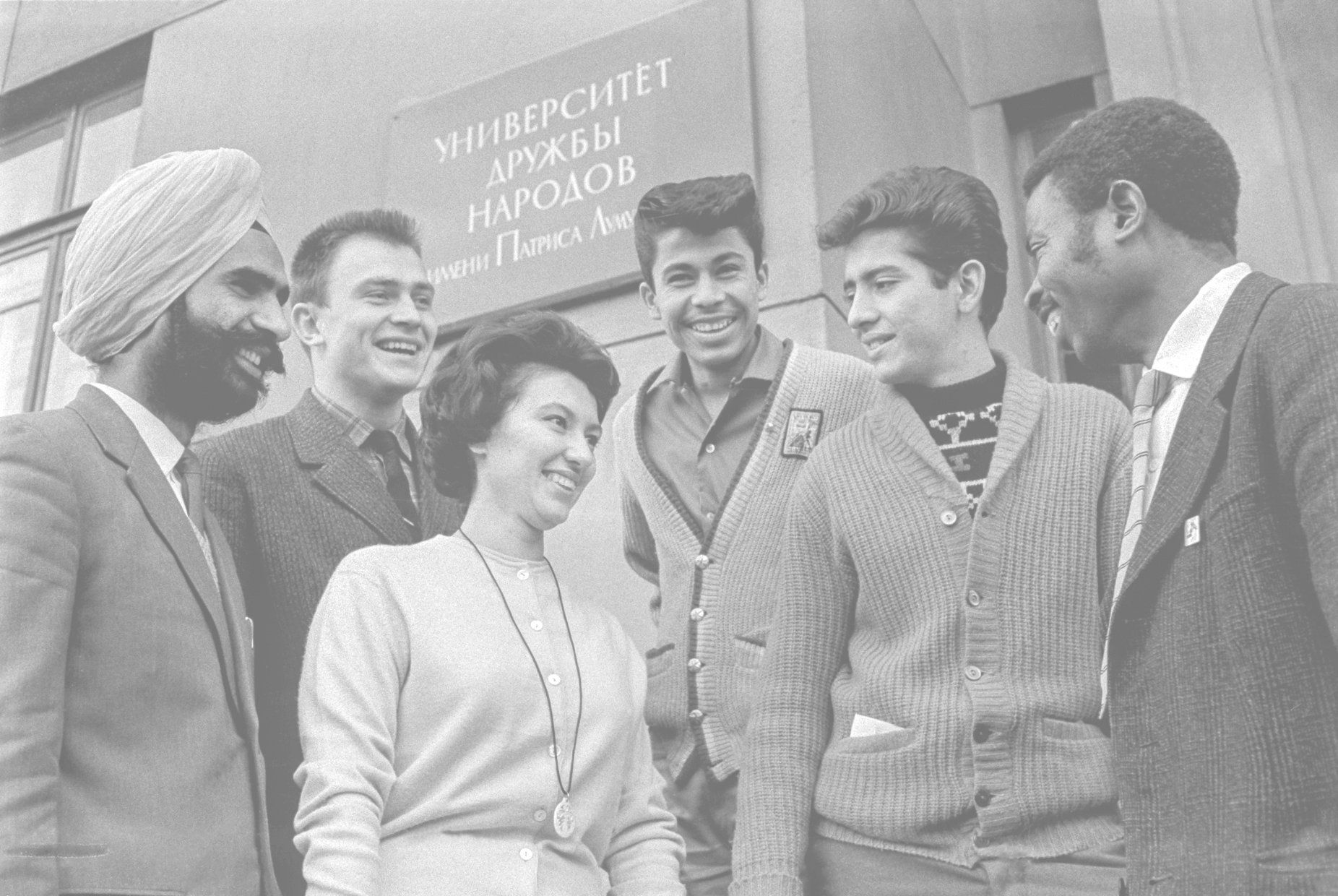
Russia offers three distinct routes to a young foreigner: a degree through direct admission, the government quota or Open Doors; legal work during full-time study at an accredited institution; and research through graduate programmes, university laboratories and science clusters. The right choice depends first on discipline, teaching language and the country where the qualification will be used.
Youth opportunities in Russia · Checked 29 September 2026
- Study: A field-by-field guide to universities, departments, teaching language, the government quota and Open Doors — and what each route can realistically lead to.
- Work: What the 2020 rule permits, where students and graduates are hired, which employers run structured routes, and what current salary evidence does — and does not — prove.
- Science: How Skoltech, Akademgorodok, MIPT, ITMO, MSU, HSE and MISIS differ — and how a foreign student can move from a degree into a real research group.
Choose your route
A field-by-field guide to universities, departments, teaching language, the government quota and Open Doors — and what each route can realistically lead to.
Work in RussiaJobs for international students in Russia: employers, internships and salariesWhat the 2020 rule permits, where students and graduates are hired, which employers run structured routes, and what current salary evidence does — and does not — prove.
Science in RussiaResearch opportunities in Russia: universities, laboratories and science citiesHow Skoltech, Akademgorodok, MIPT, ITMO, MSU, HSE and MISIS differ — and how a foreign student can move from a degree into a real research group.
Why students consider Russia
The strongest case is specific rather than general: physics and applied mathematics, computer science and AI, engineering and materials, medicine, and some quantitative social sciences. Government-funded routes and lower contract tuition can make these programmes accessible, while RUDN and major technical universities already have established international offices.
Russian is the dividing line. English-taught graduate degrees exist, but paperwork, most bachelor’s teaching, daily life and most jobs operate in Russian.
Decide in this order
- Choose the field and check the exact faculty — not only the university name.
- Check the teaching language and whether a preparatory Russian year is included.
- Check degree recognition in the country where you intend to work, especially medicine.
- Compare direct paid admission, the government quota and Open Doors.
- For work or research, contact the employer or laboratory before treating an advertised route as open to foreign students.
What this hub does not promise
It is not an admissions agency or immigration guide. Deadlines, fees, stipends, vacancies and migration practice change. Every detailed page separates stable rules from dated examples and links to the source that must be checked before an application.